About
Discouraged by the 2001 No Child Left Behind Act—which tied teaching and learning to high stakes testing—Barbara Cervone, along with education writer Kathleen Cushman, created a new organization in 2002: the nonprofit What Kids Can Do (WKCD), dedicated to championing a more capacious view of adolescent learning.
Major foundation support enabled WKCD to both document and spark examples of what it called “powerful learning with public purpose.”
A three-year grant from The Gates Foundation, for example, supported 50 student-led $5,000 “Student Research for Action” grants in 17 states. A multi-year grant from MetLife Foundation, called “Students as Allies in School Reform,” engaged students in five cities in developing a “school climate” survey for their classmates and teachers and then presenting the results at a citywide summit on improving their schools. Support from the Surdna Foundation allowed WKCD to provide stipends to students and teachers who gave their time and talent.
These and other projects, along with more than 300 feature stories about schools and programs that demonstrated “what kids can do”—and a compendium of resources—quickly filled the WKCD website.
Publishing and storytelling
In 2004, WKCD grew a nonprofit publishing arm, Next Generation Press, which by 2016 had produced more than 15 books with student co-authors. Popular titles included Sent to the Principal (2005), Hip Deep: Opinion, Vision, and Essays by American Teenagers (2006), and What We Can’t Tell You: Teenagers Talk to the Adults in Their Lives (2005).
WKCD also worked with major publishers. Fires in the Bathroom: Advice for Teachers from High School Students (The New Press, 2003), by WKCD co-founder Kathleen Cushman and a group of 20 students nationwide, was the best-selling teacher education book for two consecutive years. Fires in the Mind: What Kids Can Tell Us About Mastery and Motivation (Kathleen Cushman, Jossey-Bass, 2010) brought a game-changing question to teachers of adolescents: What does it take to get really good at something? Belonging and Becoming: The Power of Social and Emotional Learning in High Schools (Cervone and Cushman, Harvard Education Press, 2015) gained widespread attention for its examples of five high schools with a national reputation for infusing rigorous academics with social and emotional learning, resulting in demonstrable benefits for students.
The experiences and challenges of first-generation college students were a special interest. From 2004-2007, WKCD spearheaded a campaign called “First in the Family,” with multi-million dollar support from the Lumina Foundation, producing an array of materials, videos, and books co-authored with first-generation students across the country. Over 250,000 copies of First in the Family: Your High School Years: Advice About College from First-Generation Students (Next Generation Press, 2005) and First in the Family: Your College Years (Next Generation Press, 2006), reached high school and college students nationwide.
Separately, with support from The Adobe Foundation, Cervone created a collection of international media projects in which youth in China, Eastern Europe, Ethiopia, India, and Tanzania documented their communities through photography, digital storytelling, and photo essays. The proceeds from the first of this series of photo essay books, documenting daily life in a remote village near Mt. Kilimanjaro—*In Our Village: Kambi Ya Simba Through the Eyes of Its Youth (*Next Generation Press, 2006)—sent 24 graduates from the village secondary school onto post-secondary education where, before, few had the resources to pursue higher education.
What Kids Can Do retired its website and activities in 2016. We recently created this archive, pulling examples from a website that included close to 1,000 pages.
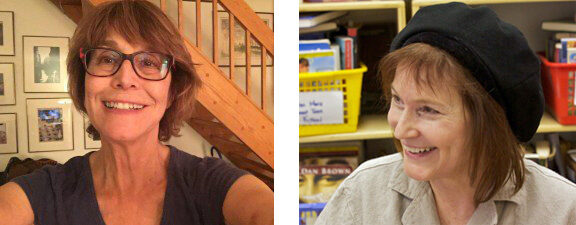
Barbara Cervone
Ever since starting an alternative school in Providence, R.I. in 1971, Cervone has championed “progressive education” in our nation’s public high schools, focused on lifting the aspirations of students challenged by race, class, and language.
In the 1980s, Cervone oversaw a national network of alternative schools. In the 1990s, she coordinated the largest private school reform initiative in U.S. history, the Annenberg Challenge. In the 2000s, she founded the nonprofit What Kids Can Do (WKCD) and Next Generation Press, championing the vision and power of youth worldwide. She was one of the first recipients of the national “Purpose Prize” for her contributions to bringing the voices of young people to community building nationwide.
Cervone has a BA from Radcliffe College and an MAT and EdD from Harvard Graduate School of Education.
Kathleen Cushman
Kathleen Cushman is a writer who has specialized in education and school reform for more than three decades. Her work has appeared in the Harvard Education Letter, Educational Leadership, Phi Delta Kappan, the Atlantic Monthly, the New Yorker, and many other national magazines. Cushman has been writer and editor of two school reform journals, Horace and Challenge Journal.
In addition to the books she authored or coauthored with What Kids Can Do and Next Generation Press, Cushman coauthored Schooling for the Real World with Adria Steinberg and Rob Riordan (Jossey-Bass, 2000) and The Real Boys Workbook with William S. Pollack (Random House, 2001).
When she was 23, Cushman, with her partner, started the Harvard Post, a weekly newspaper for the town of Harvard, MA. She continued as editor for thirty years.
Cushman has a BA from Wellesley College.